What is an eco classroom? (And what actually makes one sustainable)

The term "eco classroom" gets used a lot. It appears on supplier websites, in planning applications, and in school prospectuses. But what does it actually mean - and how do you tell the difference between a building that is genuinely sustainable and one that has simply borrowed the vocabulary?
This guide explains what an eco classroom really is, what makes one genuinely sustainable, and what to look for when choosing a supplier.
What is an eco classroom?
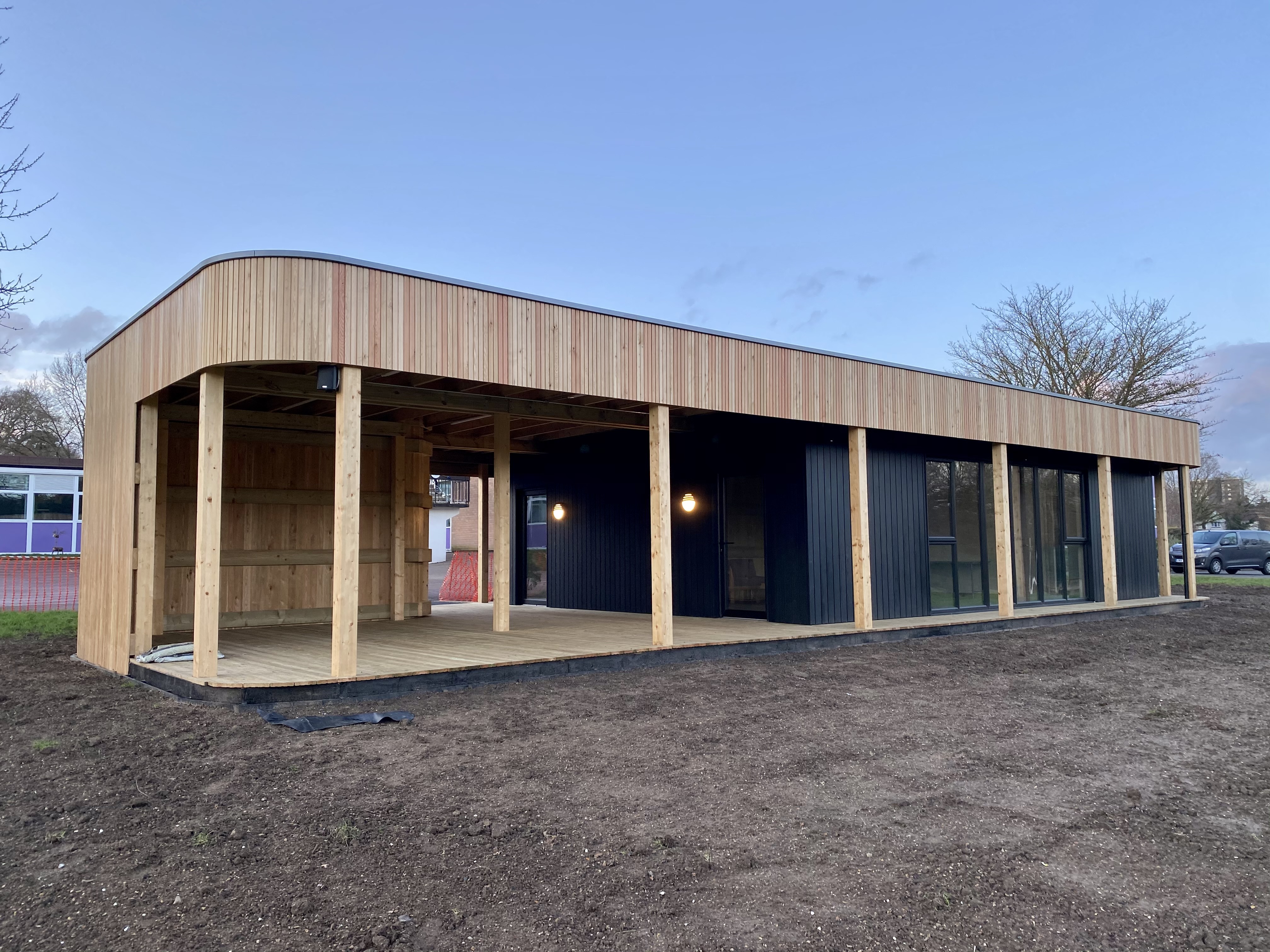
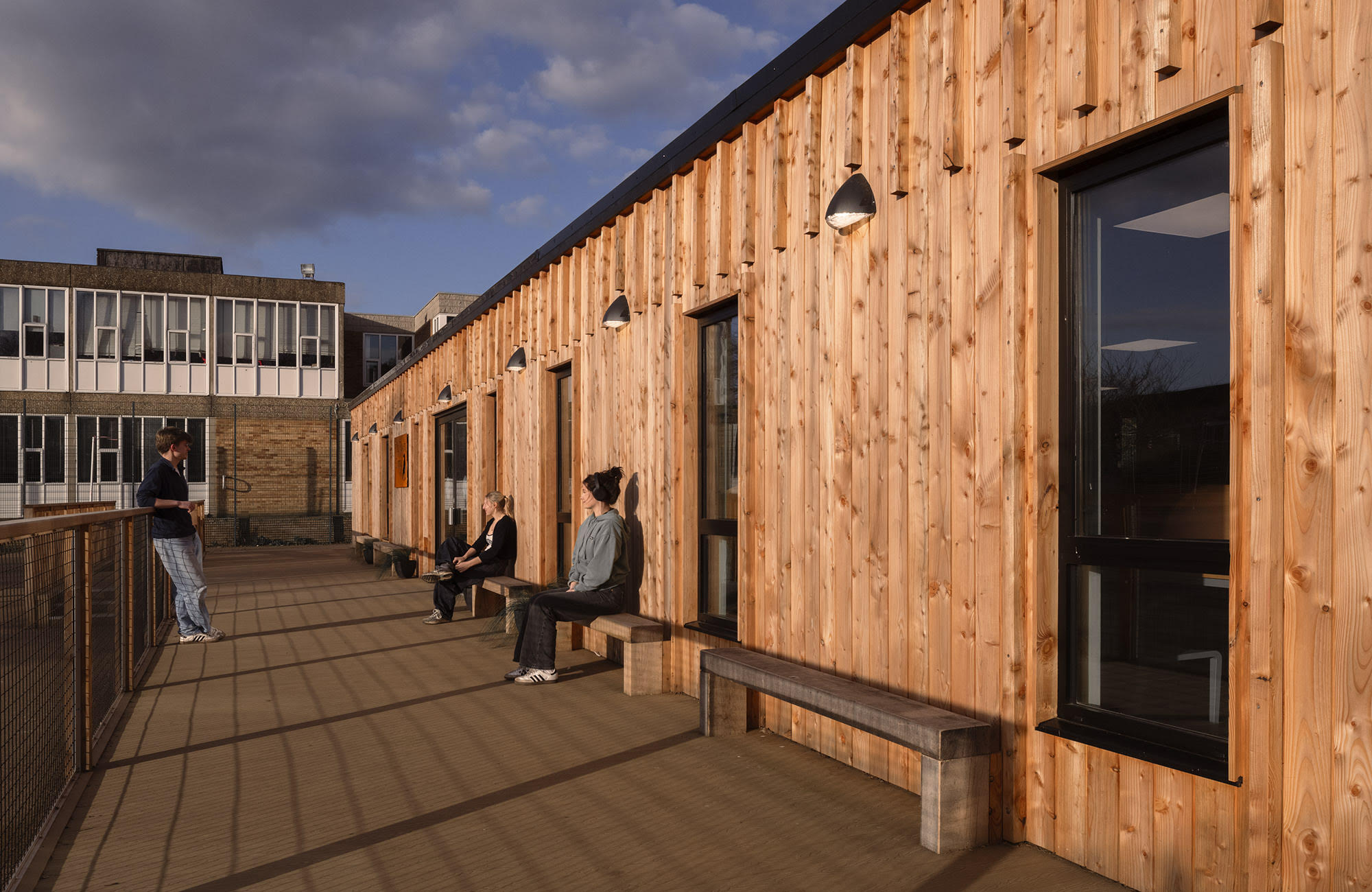
An eco classroom is a permanent, high-quality school building designed and built with genuine sustainability at its core. That means low-carbon construction methods, high-performance insulation, natural materials, excellent indoor air quality, and where possible, renewable energy features built in from the start.
It is not a portacabin. It is not a temporary unit. It is not a demountable classroom dressed up with timber cladding.
A well-built eco classroom is architecturally designed, built to full UK building regulations, and designed to last 60+ years - indistinguishable in quality and permanence from a traditionally built structure. The difference is that every material choice, construction decision, and design detail has been made with environmental impact and occupant wellbeing in mind.
What actually makes a classroom eco-friendly?
There are five areas where genuine sustainability shows up in a well-built eco classroom:
Construction method and materials
The most sustainable eco classrooms use timber frame construction with Structural Insulated Panels - SIPs. Timber is a carbon-sequestering material, meaning it actively absorbs and stores carbon dioxide during its lifetime. SIPs construction has significantly lower embodied carbon than steel or concrete alternatives, and delivers superior thermal performance as standard.
This matters both environmentally and practically. A building constructed from responsibly sourced timber and SIPs panels has a fraction of the carbon footprint of a traditional build - and performs better on energy efficiency from day one.
Thermal performance
A genuinely eco classroom stays warm in winter and cool in summer without expensive or energy-intensive mechanical systems. SIPs construction consistently outperforms traditional cavity wall construction on thermal performance - with U-values that exceed building regulations minimum requirements as standard.
Lower energy demand means lower heating bills, a smaller carbon footprint, and a more comfortable environment for pupils and staff year-round.
Indoor air quality
This is one of the most overlooked aspects of eco classroom design - and one of the most important. CO₂ levels in poorly ventilated classrooms regularly exceed 1,500 parts per million, at which point research shows measurable reductions in concentration and cognitive function in children.
A well-designed eco classroom uses mechanical ventilation with heat recovery - continuously bringing in fresh air while retaining warmth - to maintain optimal air quality throughout the school day. The result is a classroom where children can actually focus.
Read more on how design can improve wellbeing and performance.
Natural materials and non-toxic finishes
Responsibly sourced timber, natural finishes, and non-toxic, low-VOC materials are standard in a genuinely eco classroom. This is particularly important in nursery settings where young children spend extended time in close contact with surfaces and finishes.
Renewable energy
Solar PV panels, sedum roofs, and rainwater harvesting systems extend the eco credentials of a classroom beyond the building fabric itself. A solar-powered eco classroom can offset a significant proportion of its energy demand - and the visible technology becomes a live teaching resource for pupils.
Eco classrooms vs portacabins - not the same thing
It is worth being direct about this because the confusion is common.
Portacabins and demountable classrooms are temporary structures - typically steel-framed, poorly insulated, and designed for short-term use. They are often leased rather than owned, with no planning permission for permanent use, and they degrade in quality over time. We put together a guide on the hidden costs of temporary modular builds, read it here.

A modern eco modular classroom is none of these things. It is a permanent building on permanent foundations, owned outright by the school, built to the same standards as any other permanent structure on the site. The fact that it is manufactured offsite and assembled quickly does not make it temporary - it makes it efficient.

The confusion between the two has cost many schools money. A leased temporary unit at £8,000-£15,000 per year costs £80,000-£150,000 over a decade - for a building the school never owns. A permanent eco modular classroom from £1,950 per m² is owned outright from day one and will still be serving pupils in 2085.
What eco classrooms do for pupils and staff
The benefits of a well-designed eco classroom extend well beyond the environmental case.
Research by the University of Salford found that the physical classroom environment accounts for up to 16% of variation in learning progress over a school year. Natural light, good acoustics, stable temperatures, and fresh air all contribute directly to how well children learn and how effectively teachers teach.
A genuine eco classroom - with high-performance insulation maintaining stable temperatures, mechanical ventilation maintaining air quality, natural materials reducing stress responses, and carefully positioned glazing maximising natural light - creates the conditions where learning actually happens.
For teachers, the same factors reduce fatigue and improve wellbeing. A school that invests in high-quality eco classrooms is investing in its staff as much as its pupils.
What to look for in an eco classroom supplier
When a supplier describes their buildings as eco-friendly, ask for specifics:
- What construction method do you use and what are the U-values?
- What ventilation system is specified as standard?
- Are interior materials tested for VOCs?
- Can you provide energy performance data for a completed project?
- Is the building permanent or temporary?
A supplier who answers these questions with data is one who takes sustainability seriously. A supplier who answers with marketing language and no specifics is one who has borrowed the vocabulary without the substance.
Eco classrooms from Eco Classrooms & Nurseries
Every eco classroom and nursery we build uses SIPs construction and responsibly sourced timber as standard. Non-toxic, child-safe materials are specified on every project. Solar PV, sedum roofs, rainwater harvesting, and mechanical ventilation are all available.
Every building is permanent, bespoke, and designed around the school or nursery it serves, not selected from a catalogue.
Talk to us about your project →

Sustainable Modular Buildings for Schools, Nurseries & Community Spaces
From nurseries and classrooms to multi-use community buildings, we design and build sustainable modular buildings across the UK, tailored to each site, built to last, and delivered with minimal disruption.


Explore Our Latest Insights
Discover innovative ideas for educational spaces.